Introduction
Pakistan’s tax system has long struggled with issues of documentation, tax evasion, fragmented databases, and a narrow tax base.
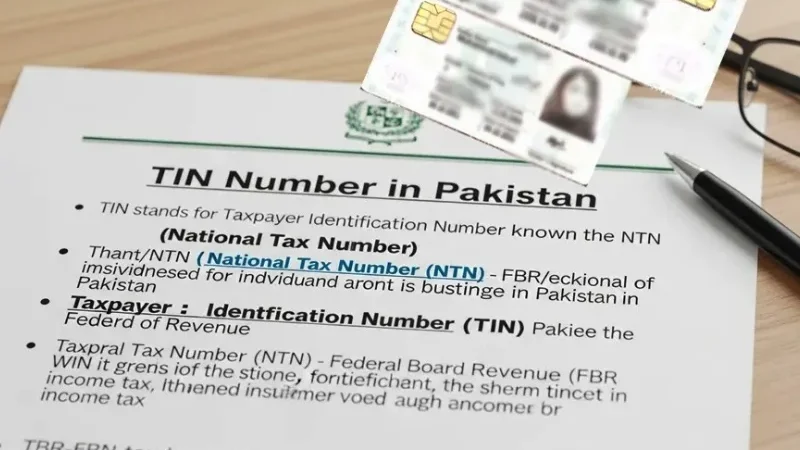
One of the contributing factors is the existence of multiple identification systems for citizens and taxpayers, including the Computerized National Identity Card (CNIC) and the National Tax Number (NTN). While the CNIC serves as the primary identity document for every adult citizen, the NTN operates as a separate identifier for tax purposes, creating unnecessary duplication and administrative complexity.
This article proposes the integration of the NTN with the CNIC, making the CNIC the sole identification number for all tax-related activities, including sales, purchases, bank accounts, transactions, property dealings, vehicle ownership, driving license and business activities etc.
Such a reform would mirror successful practices in countries such as the United Kingdom, where a single national identifier is used across multiple government functions, thereby simplifying compliance and improving tax collection.
The Current Challenge
At present, taxpayers in Pakistan are often required to maintain both a CNIC and an NTN. Although the Federal Board of Revenue (FBR) has made progress in linking these databases, the continued existence of two separate identifiers creates confusion, duplication of records, and administrative inefficiencies.
Many citizens remain outside the documented economy because transactions cannot be seamlessly tracked across different databases. Businesses frequently face difficulties in verifying tax status, while tax authorities expend considerable resources reconciling records maintained under separate identification systems.
The result is a fragmented framework that hinders effective tax administration and contributes to revenue leakage.
The UK Model: Simplicity and Integration
The United Kingdom offers an instructive example of administrative efficiency. British citizens interact with government departments using integrated identification systems that are linked to personal records. Tax authorities, employers, financial institutions, and government agencies can coordinate information through common identifiers without requiring citizens to maintain multiple tax numbers for routine transactions.
A similar approach in Pakistan would allow the CNIC number issued by the National Database and Registration Authority (NADRA) to serve as the sole identifier for tax purposes. Every citizen would automatically become traceable within the national tax framework from the age of eligibility, eliminating the need for separate NTN registration.
Advantages of Making CNIC the Sole Tax Identity
- Enhanced Tax Documentation
This would significantly reduce the undocumented economy and improve transparency.
- Expansion of the Tax Base
Consequently, the tax base would broaden without imposing new taxes.
- Reduction in Administrative Costs
- Improved Compliance
Tax filing could become as straightforward as accessing a taxpayer profile linked directly to the individual’s CNIC.
- Better Monitoring of Sales and Purchases
This would enable the FBR to develop accurate economic profiles and identify discrepancies between declared income and actual spending patterns.
- Stronger Anti-Corruption Measures
Implementation Strategy
The transition from NTN to CNIC should occur gradually through the following steps:
- Official declaration of CNIC as the primary taxpayer identification number.
- Automatic migration of existing NTN records into CNIC-linked taxpayer profiles.
- Integration of NADRA, FBR, banking institutions, property registries, vehicle registration authorities, and utility providers.
- Mandatory CNIC-based reporting of high-value transactions.
- Development of secure digital taxpayer portals linked directly to CNIC numbers.
- Strong legal safeguards to protect privacy and prevent misuse of personal data.
While the proposal offers substantial benefits, concerns regarding privacy, cybersecurity, and data protection must be addressed. Citizens must be assured that their information will be protected through modern encryption standards, independent oversight mechanisms, and strict legal penalties for unauthorized access.
Furthermore, integration should be accompanied by improvements in digital infrastructure to ensure reliability and public confidence.
Conclusion
The abolition of the NTN as a separate identifier and its complete integration with the CNIC represents a logical and necessary reform for Pakistan’s tax administration system. By adopting a unified identity framework similar to those used in advanced economies such as the United Kingdom, Pakistan can improve tax collection, reduce administrative burdens, expand the tax base, and enhance transparency across the economy.
A single CNIC-based tax identity would not merely simplify procedures; it would lay the foundation for a modern, efficient, and data-driven fiscal system capable of supporting sustainable economic growth and strengthening public finances. As Pakistan seeks to increase revenue without imposing excessive taxation, integrating NTN into CNIC may prove to be one of the most effective structural reforms available.