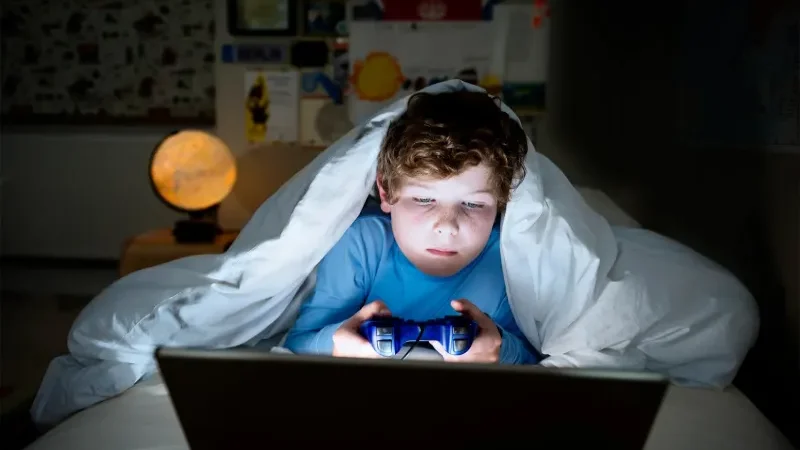
Excessive video gaming is raising concerns among experts as children spend more time online, potentially affecting their behavior, education, health and social lives.
Experts warn that while games can provide entertainment and digital skills, spending too many hours on screens may lead to anger, poor school performance and social isolation. The concern is growing worldwide as gaming becomes an increasingly common part of children's daily routines.
children often turn to online and video games for fun, competition and relaxation. However, problems can arise when gaming takes up most of their free time. In some cases, they may also show aggressive behavior, including angry reactions, fights or difficulty controlling their emotions.
Excessive gaming can also affect children's education. When gaming replaces homework, reading, sleep or other daily activities, children may lose interest in schoolwork. Their classroom performance can suffer as they spend less time studying and more time in front of a screen.
Experts also warn about the possible effects on children's physical and mental well-being. Sitting for long periods can reduce physical activity and encourage an unhealthy routine. At the same time, children who spend most of their free time gaming may have fewer opportunities to develop communication and social skills.
Family relationships can also suffer, because Children may choose games over conversations, outdoor activities or time with parents and siblings. Over time, this can create distance within the family and reduce opportunities to build trust, cooperation and emotional connections.
Experts say the answer is not to completely ban video games. Technology is an important part of modern life, and children need to learn how to use it responsibly. Instead, parents should set clear limits on gaming time and monitor what their children are playing.
Parents can also encourage healthier alternatives, such as outdoor sports, painting, drawing, arts and crafts, reading and other creative activities. Spending time with family and friends can further help children develop stronger social skills.
Experts recommend a balanced approach that allows children to enjoy gaming without letting it control their daily lives. With clear limits, parental guidance and healthy activities, children can benefit from technology while protecting their education, health and relationships.