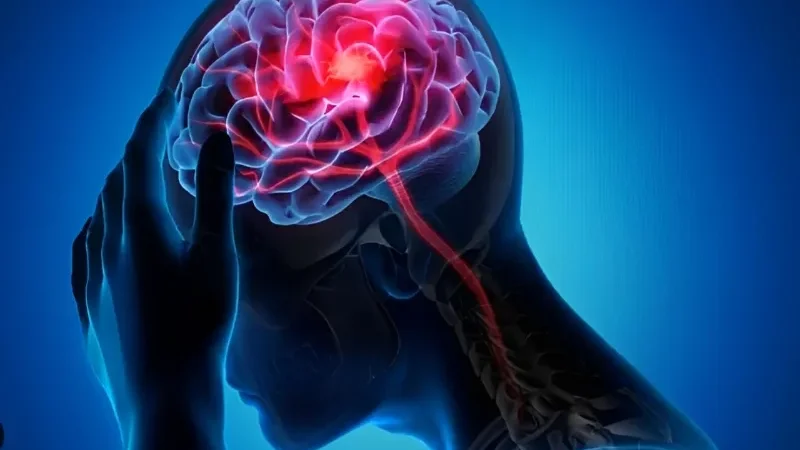
ST. LOUIS: Researchers at Washington University School of Medicine have identified a brain mechanism that may help control chronic nerve pain, finding that a specific region of the brain can act as a natural brake on pain signals.
The study found that certain receptors in the locus coeruleus, a small area near the base of the brain, can suppress an overactive pain circuit. The discovery could eventually help scientists develop more targeted treatments for people with chronic neuropathic pain.
Chronic pain can continue for months or even years after an injury or illness. For people with nerve pain, ordinary sensations such as a light touch can sometimes cause intense burning, shooting or electric-like pain.
Researchers focused on the locus coeruleus because the brain region plays an important role in stress, alertness and pain control. Their experiments showed that opioid receptors in this region can act as a molecular brake, helping the brain reduce abnormal pain signals.
Under normal conditions, the neural circuit helps keep pain responses under control. However, the researchers found that nerve injury can change the circuit, causing the locus coeruleus to become a source of persistent pain instead of helping suppress it.
Drugs such as morphine and fentanyl act on opioid receptors throughout the body and central nervous system. Their widespread effects can lead to side effects, tolerance and a risk of addiction.
Rather than activating opioid receptors throughout the body, researchers say future medicines could potentially be designed to target opioid receptors specifically in the locus coeruleus.
The research could be particularly important for neuropathic pain, which can be difficult to treat with existing medicines. By identifying a specific brain circuit involved in pain control, scientists may be able to develop therapies that are more precise than traditional opioid treatments.