- Bangladesh’s northeast is already inundated, with 1.8 million people affected by flooding.
- Authorities anticipate increased flooding this week due to rising water levels due to the monsoon season.
- Seven main rivers are currently flowing above the danger levels, causing floods in seven districts.
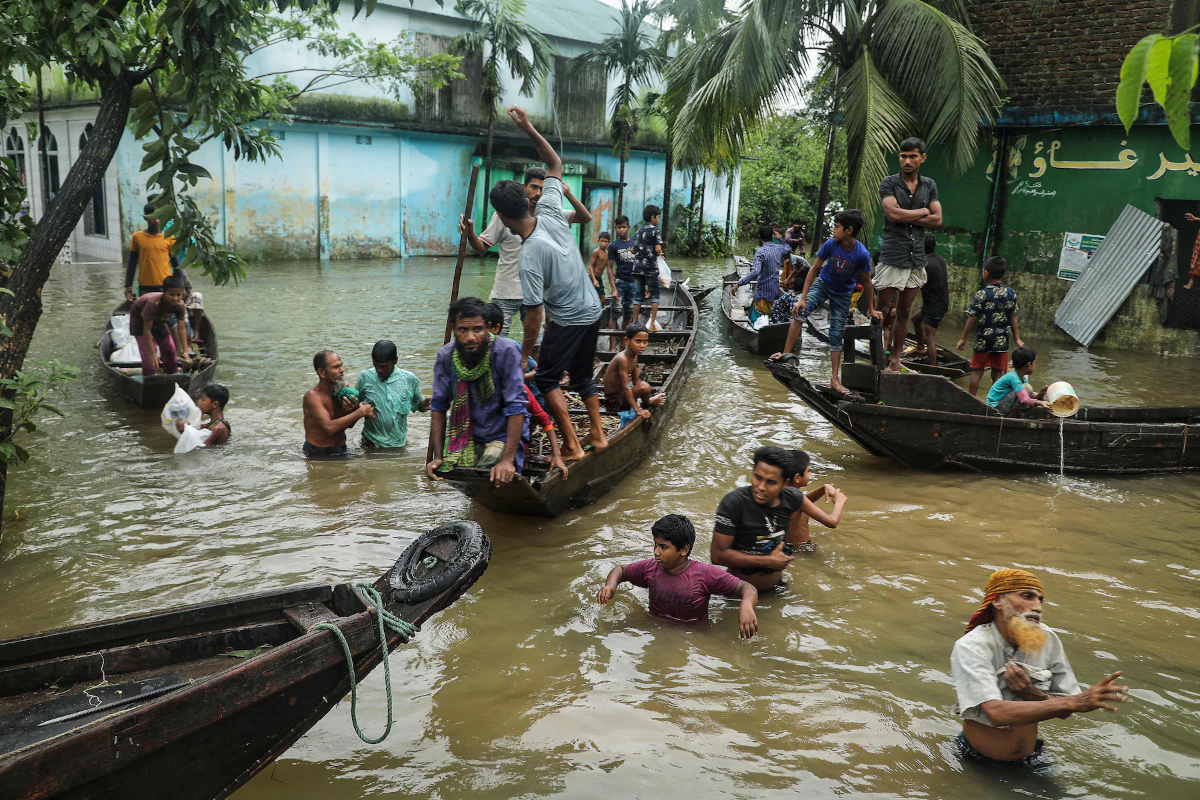
On Wednesday, millions of Bangladeshis in the country’s already inundated northeast remained on alert as they braced for more flooding in the coming days. Sylhet, Bangladesh’s second-largest city, and neighboring districts have been underwater for several days.
“As of today, 1.8 million people have been affected by flooding,” Mohammad Asaduzzaman, joint secretary of the Department of Disaster Management, told the news.
Authorities expect the number of people displaced and isolated by floodwaters to increase this week as water levels in the riverine region continue to rise due to the extreme onset of the monsoon season, which is also wreaking havoc in neighboring India.
“Seven of our main rivers are currently flowing above the danger levels at 16 points, resulting in floods in seven districts,” Uday Raihan, executive engineer at the Flood Forecast and Warning Center of the Bangladesh Water Development Board, told the news.
“On July 5 and 6, the northeastern region will see another round of increase in floodwater. In addition to the existing seven districts, four to five new districts will be affected.”
Seasonal floods during the June-September monsoon affect millions of people in Bangladesh, which has hundreds of rivers. Many rivers bring water from India and burst their banks before reaching the Bay of Bengal.
Even bigger flooding is likely to hit Bangladesh this August, with downpours expected to be more intense across the entire country.
On Tuesday, the Bangladeshi government held a special meeting on disaster response, fearing a repeat of the record rainfall in India’s Meghalaya state in 2022, which triggered the most severe flooding in Bangladesh’s history.
The severe flooding displaced at least 7.2 million people and killed 100 in the low-lying areas of Sylhet and Sunamganj districts. Authorities estimated the economic damages at about $1 billion.
“There is a fear of another seasonal flood in August. At the moment, we can’t forecast the situation,” Raihan said.
“In recent years, we have noticed frequent flood situations in the country. We need to have more research to assess their relation to the impacts of climate change.”
[embedpost slug=”bangladesh-plans-to-send-1300-drivers-to-dubai-this-year/ “]