





Implications of the democracy summit
The virtual democracy summit called by American President Joe Biden, to which Islamabad was invited, took place without Pakistan participating in it.
The official statement issued by the Ministry of Foreign Affairs a day before the event stated that “we are thankful to the US for inviting Pakistan for participation in the Summit for Democracy”.
The statement went on to emphasize that Pakistan values its partnership with the US that it wishes to expand both bilaterally as well as in terms of regional and international cooperation. “Pakistan is a large, functional democracy with an independent judiciary, vibrant civil society, and a free media. We remain deeply committed to further deepening democracy, fighting corruption, and protecting and promoting human rights of all citizens. In recent years, Pakistan has instituted wide-ranging reforms aimed at advancing these goals.
“We remain in contact with the US on a range of issues and believe that we can engage on this subject at an opportune time in the future,” the Foreign Office said, while politely rejecting the invitation. “Pakistan will, meanwhile, continue to support all efforts aimed towards strengthening dialogue, constructive engagement, and international cooperation for the advancement of our shared goals.”
By staying away from the democracy summit, Islamabad may have incurred the displeasure of Washington as the summit was being considered as an icebreaker in the tension-filled bilateral relations since Biden’s advent to power about a year ago. One barometer of these tensions is President Biden’s inability to make a call to Prime Minister Imran Khan.
Advertisement
One reason why Islamabad was forced to decline to participate in the democracy summit, a personal initiative of President Biden, was to dispel the impression that Islamabad was at the beck and call of Washington, regardless of its treatment of Pakistan.
There are various other factors at play undergirding Islamabad’s decision to stay away from the democracy summit.
The first and foremost is the “China” factor. Islamabad has consistently advocated and upheld Beijing’s claim that Taiwan is an integral part of China and Islamabad, like Beijing believes in the One Country Two Systems policy. Further, Islamabad believes in peaceful unification of Taiwan with People’s Republic of China and is opposed to attempts to encourage independence. By not inviting China to the summit and by including Taiwan in it, it became clear that Washington wanted the summit to be seen an anti-China alliance of all democratic forces.
Islamabad did not want to be part of this anti-China get-together. It is significant to note here that China’s official spokesperson commenting on Islamabad’s refusal to attend the democracy summit described it as proof of Pakistan being “real iron-brother of Beijing”.
The second factor that explains why Islamabad chose to stay away from the event was that important Muslim countries like Saudi Arabia, Turkey, Bangladesh and many other Gulf countries were excluded from this event, because they did not fit Washington’s description of democracies. This arbitrariness in selecting countries in its definition of what constitutes democracies was not lost on Islamabad and, therefore, rather than becoming part of a controversial event, Pakistan played safe by staying away from it.
Third, Islamabad apprehended that the platform might be used as a vehicle to excoriate countries like Pakistan for their less than perfect record on human rights, corruption and governance.
Advertisement
And finally, as a broken democracy itself, as highlighted by recent American elections, Washington was hardly in a position to lecture others on virtues of democracy.
What is more important is the substance of democracy, the ability of the elected governments to deliver services to the people, to address the issue of poverty, widening income inequality and socio-economic justice.
With the sole exception of Germany and the Nordic countries, all democracies including the US are struggling to make a difference to the lives of millions of their citizenry under democratic leadership.
In this regard, it is instructive to note that prior to the holding of the democracy summit, a meeting of scholars from all over the world was held in Aspen, US to take stock of why democracy was on the retreat and why authoritarianism seemed to be the rising trend in the world.
The main conclusion of this policy group was that:
“Within the United States…polarization keeps getting worse. And in addition, as President Biden often notes, our system needs to demonstrate that democratic government can deliver for the people, which is proving to be something of a challenge.
Advertisement
“Democracy is under attack around the world – from pervasive threat of mis-and disinformation, populist leaders, weakening democratic institutions, China and Russia promoting authoritarianism as an alternate model, and the decay of bipartisanship and civility domestically.
“China posed the greatest challenge to the democratic model. How can the US best demonstrate the value of the democratic system given China’s rise as an economic, technological, military and ideological rival? Against the backdrop of China’s new national security law in Hong Kong, Chinese aggression in the South and East China Seas, and Taiwan, the Chinese Communist Party celebrated its 100th anniversary this year when Xi Jinping espoused “socialism with Chinese characteristics” as the source of China’s “national rejuvenation” and warned that foreign powers that opposed it would “crack their heads and spill blood.”
It is obvious from these key themes highlighted by Aspen Strategy Group that the main purpose of the democracy summit was to explore the ways to meet the “China challenge”.
Islamabad did well to stay clear from the democracy summit since it offered little substance in terms of Pakistan’s national interest, and risked undermining Islamabad’s strategic partnership with Beijing.
There are many critics of this stance who have argued that Pakistan missed a great opportunity by turning down the American offer and thereby strengthening its credentials before the international community as a democratic state. To such critics, one can only say that Islamabad should learn the art of saying “no” to friends, especially when these friends have behaved towards Pakistan as “masters” and have offered little help to Pakistan when the country was struggling for its survival in 1971.
Advertisement
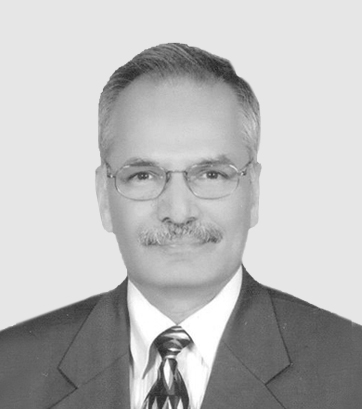
The writer is a political scientist and defense analyst.
Advertisement


