





Fresh start for Pak-US ties
Pakistan’s newly-minted Foreign Minister Bilawal Zardari Bhutto will be leaving for New York on a two day official visit to the US from May 17- 18. He has been invited by his counterpart, Antony Blinken to attend a food security meeting that will be chaired by the American secretary of state in New York.
The meeting is aimed at responding to the escalating food prices across the world in the wake of Russia’s invasion of Ukraine. Its agenda includes a review of the urgent humanitarian needs and propose steps to build resilience for the future. The ministerial meeting will be followed by a UN Security Council (UNSC) debate on “Conflict and Food Security”.
During his visit, the Foreign Minister Bilawal Bhutto Zardari will also hold meetings with UN Secretary-General Antonio Guterres and President of UN General Assembly Abdullah Shahid, and will hold some bilateral meetings with his counterparts.
Since Russia and Ukraine stand-off since February 24, the global wheat prices have increased by roughly 21 percent, barley by 33 percent, and some fertilizers by as much as percent. “This upcoming food security ministerial in New York is a prime opportunity to talk about the immediate solutions and long-term strategies which are really important”.
Because the world is facing the “most serious food crisis in over 70 years, the worst since World War II”, the US has called for two ‘Days of Action’ on the food crisis “to rally the world to take steps to bolster food supply chains and strengthen food resilience”, according to a State Department official.
Advertisement
Even though the meeting on food security is occurring in a multilateral context, it assumes significance on account of a sharp deterioration in bilateral ties between Islamabad and Washington because of allegations hurled at Washington by Imran Khan that his ouster from power last April was engineered by Washington with the help of his local allies, belonging to the ruling coalition led by Prime Minister Shehbaz Sharif.
Washington repeatedly has denied these allegations as “baseless propaganda” and has maintained that it has nothing to do with Mr. Khan’s removal from power that happened due to internal political dynamics of Pakistan.
Reacting to Mr. Bilawal Bhutto’s meeting with Mr. Antony Blinken’ visit in New York, former Prime Minister Imran Khan while addressing a big public rally in Faisalabad said that Islamabad should not expect anything positive from this meeting since Washington was fully aware of the corrupt practices of the Zardari clan.
Pakistan’s economy seems to be in free fall with country’s foreign exchange reserves only sufficient to foot its import bill for the next three months.
It would be interesting to see if Washington would be willing to help Islamabad at this critical juncture. If Bilawal was invited to Washington for a bilateral meeting with Blinken, it would be a symbolic breakthrough in breaking the deep freeze in which this important relationship has been thrown during the Biden administration.
Until last year US was the biggest market for Pakistan exports and one of the largest source of foreign direct investment. There are over 80,000 Pakistani students studying in the US and the American Fulbright Program is one of the biggest in the world.
Advertisement
“The United States is Pakistan’s largest export destination, while China is Pakistan’s largest import partner. Trade with the United States reached a record $6.8 billion in 2020, but overall foreign investment remains weak. Pakistan can be an attractive market due to favourable demographics, English language skills, low labour costs, and natural resources, but trade and investment barriers, as well as security concerns, limit the ability of the US companies to enter the market.”
Despite American strategic preference for India because of the China factor and despite attempts by PTI to whip up anti-American feeling in Pakistan, Washington is still interested in cultivating friendly ties with Pakistan.
As a recent congressional study put it: “The United States conveys that it works ‘closely with Pakistan on a wide array of issues ranging from Afghanistan stabilization efforts to counterterrorism to energy to trade and investment,’ and notes that the United States has been one of the largest sources of foreign direct investment in Pakistan and remains Pakistan’s largest export market.”
It is most unfortunate that this relationship has been held hostage to exigencies of domestic politics in Pakistan.
While it may not be possible to completely revive this relationship in the current atmosphere marked by bitter accusations and deep suspicion, both countries despite their divergences can make a joint effort to expand the common ground which provided the historical backdrop to their becoming friends in the first place.
In the emerging global security scenario, it is imperative for Pakistan not to get isolated and remain relevant to the evolving security architecture in which issues like climate change, pandemic, global income inequality, nuclear non-proliferation, maritime security and development enjoy pivotal significance.
Advertisement
As a country of 220 million people located at the cross sections of South, Central Asia and West Asia, Pakistan is one of the “pivotal states” that can hardly be left out by United States as it tries to reshape the world order. The current political turbulence in Pakistan should not discourage those Americans who are willing to engage with Pakistan on the basis of reciprocity, respect and promotion of mutual interest. One area of overriding common interest between United States, Pakistan and China is deepening and broadening the scope of their trilateral cooperation in the field of counter-terrorism.
Recent upsurge of terrorism in Pakistan, especially the attack on Chinese civilians, should provide the rationale that all three countries need to pool their sources to combat this rising and common menace of terrorism. There are ample signs of the revival of Daesh and Jihadi outfits in Taliban controlled Afghanistan. Washington, Islamabad and Beijing need to work together to tackle this challenge. Let us hope that Foreign Minister Bilawal Bhutto’s visit to New York will open the doors to a good and meaningful conversation between the two estranged allies.
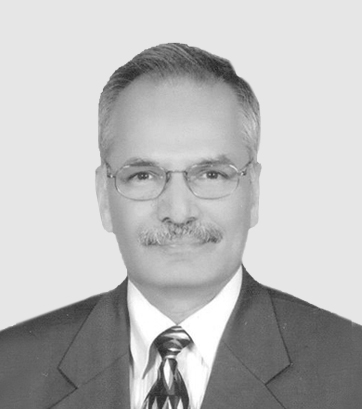
The writer is a political scientist and defence analyst
Advertisement


